kutatas
America's Youth AI Festival: A Student-Led AI Policy
America’s Youth AI Festival: students from across the country gathered in Boston to shape the nation’s first student-led AI policy for schools.
143 articles

Why a school district’s summer semester programming is a critical piece of their year-long academic strategy.
America’s Youth AI Festival: students from across the country gathered in Boston to shape the nation’s first student-led AI policy for schools.

Explore the STUDENT FIRST Act, passed at the 2026 Youth AI Festival in Boston—new AI policy protections for students, teachers, and schools.

Student leaders, educators, and school system leaders from across the country gathered to kick off the America’s Youth AI Festival, with a media availability highlighting the AI Student Senate.

Student leaders from across the country spent Saturday collaborating, debating, and building the framework for what will become the first student-led national AI Policy for K-12 public schools during the opening day of the America’s Youth AI Festival.

Students from all 50 states approved a first-of-its-kind set of national policy recommendations for the responsible use of artificial intelligence in K-12 education at the inaugural America’s Youth AI Festival.

Learners and Families Shaping Action: Strengthening partnerships for inclusive education Timothy Bevan Thu, 07/30/2026 - 10:57 This video introduces the key messages and outputs of the Learners and Families Shaping Action (LFSA) activity by the European Agency for Special Needs and Inclusive Education (EASNIE). It looks at why meaningful partnerships with learners and families are essential for inclusive education, and how their voices can help strengthen monitoring and evaluation. The video also presents the LFSA Self-Reflection Tool and Guidance Measures, which support education systems to become more inclusive, responsive and effective. Find out more about the LFSA activity and access its outputs: Learners and Families Shaping Action. To enable subtitles, go to the Settings icon in the bottom-right corner of the video player, select Subtitles/CC, and choose your preferred language. #EASNIE #InclusiveEducation #LearnerVoice #FamilyEngagement #StrengtheningEducation #MonitoringAndEvaluation #EuropeanCommission

Strengthening Partnerships in Education: Guidance measures for decision-makers Aine Wynne Wed, 07/29/2026 - 14:41 These guidance measures offer practical support to decision-makers at national, regional and local level in strengthening partnerships across education systems. They are an output from EASNIE’s Learners and Families Shaping Action (LFSA) activity, which explored the role of learners’ and families’ voices in monitoring and evaluation frameworks for inclusive education. The guidance measures support and complement the LFSA Self-Reflection Tool on Partnerships in Education. Both the guidance measures and the tool focus on six areas of partnership: legislation and policy; governance; funding and resource allocation; quality assurance, accountability and system data; capacity building and inclusive leadership; and collaboration, communication and co-operation. Whereas the tool supports decision-makers in examining and questioning their current partnership structures and identifying areas for development, the guidance measures focus on how to address them in practice. The full guidance measures document is available for download below, along with standalone summaries of the guidance measures for each of the six areas. Downloads Hide 7 files Please select a file below to open it in a new window, or right click and ‘Save link as’ to download the file to your local computer. English Strengthening Partnerships in Education: Guidance measures for decision-makers.pdf English Area 1 Guidance Measures Summary.pdf English Area 2 Guidance Measures Summary.pdf English Area 3 Guidance Measures Summary.pdf English Area 4 Guidance Measures Summary.pdf English Area 5 Guidance Measures Summary.pdf English Area 6 Guidance Measures Summary.pdf children’s/learners’ rights country cluster activity family involvement learners’ voices stakeholder involvement

Inclusive education at Romuvos Progymnasium Rachel Mepsted Wed, 07/29/2026 - 11:08 Lithuania Romuvos Progymnasium is a city school in Šiauliai that provides customised and personalised general and basic education programmes. Learners have access to social and psychological consultations, special assistance, vocational guidance and health care. Complex help is provided by psychologists, special educators, speech therapists, social educators and teaching assistants. These specialists co-operate to ensure effective and quality education, improving learners’ achievements. Educational content is personalised and differentiated according to learners’ natural abilities, experience, motivation, interests, aims, achievement level, learning styles and moral values. The lesson aims, teaching materials, tasks, methods and pace take into account learners’ individual progress and achievement, developing their learning skills to enable learners to reach higher knowledge levels. Partnerships between all educators (teachers, specialists, parents and others) are very important. Common objectives and provisions help to achieve learners’ comprehensive maturity and families play an important role in this process. The school aims to help learners understand the surrounding world and their interests. Learners with special needs take part in various activities with other learners, which encourages them to discover their strengths, learning and personal qualities, set goals and assess real possibilities. Find out more in the Raising the Achievement of All Learners in Inclusive Education activity’s country report for Lithuania.
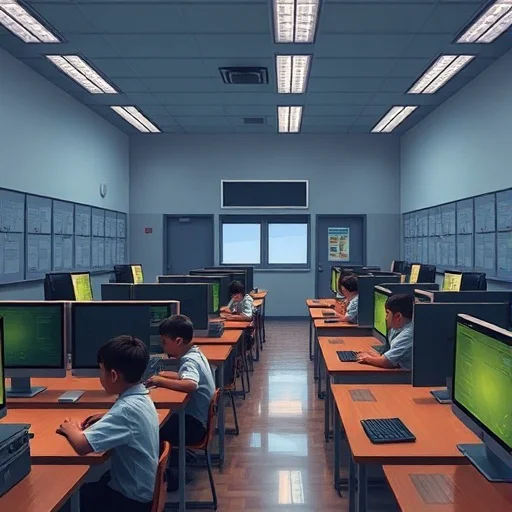
Alambra Primary School professional learning programme Rachel Mepsted Wed, 07/29/2026 - 10:12 Cyprus Alambra Primary School ran a professional learning programme, with help from the Cyprus Pedagogical Institute. The school staff went through several stages, diagnosing the needs of learners, parents and teachers, setting priorities and actions and assessing their impact. The school’s priorities were: effective teaching to raise achievement of all learners; helping learners to comprehend and face reading difficulties. The professional learning programme determined the school’s priorities and emphasised the needs of the school population and teacher development. The programme found that effective measures to raise achievement include: investigating learners’ and teachers’ learning needs; focusing on priorities at a school level, not national level; implementing individual action plans; pedagogical teacher meetings to exchange ideas; differentiation in the classroom; self-evaluation; flexibility to redefine goals. Find out more in the Raising the Achievement of All Learners in Inclusive Education activity’s country report for Cyprus.

Encouraging and acting on parental advocacy Rachel Mepsted Wed, 07/29/2026 - 10:04 Cyprus A Cypriot school provided a platform for a non-verbal learner with cerebral palsy and hearing issues and their mother to express what was needed for the learner to feel and be included in mainstream classes. Special needs practitioners from a school for the deaf offered guidance and expertise to stakeholders at the mainstream school. A multidisciplinary team, in co-operation with the Special Educational Needs Co-ordinator, evaluated the learner’s needs. The Ministry of Education, the School Board and teachers were also involved. The mother and the learner were present in school meetings and multidisciplinary team meetings. They also met the Director of Secondary Education several times and the Minister of Education, to discuss the learner’s needs and the actions needed. The Special Educational Needs Co-ordinator had almost daily contact with the mother. This initiative led to clear, tangible outcomes, such as the installation of ramps, elevators, assistive technology like special whiteboards and bathroom equipment. Class syllabi were also adjusted to be more inclusive and meet the learner’s needs. This process has also begun in other Cypriot schools. Find out more in the Voices into Action Toolkit.
Transition from special to inclusive schooling Rachel Mepsted Wed, 07/29/2026 - 10:02 Cyprus A 17-year-old learner with cerebral palsy was studying at a special unit in Cyprus. Separation from his friends and classmates had a negative psychological impact, so he transferred to a mainstream class in his local school. The learner joined a Central Committee of Special Education (CCSE) meeting to express his feelings and needs. The CCSE also requested and assessed specialist opinions, including those of a child psychiatrist and an inspector of special education. The CCSE, the District Committee of Special Education (DCSE), the school’s educational psychologist, teachers, the Special Educational Needs Co-ordinator, the Special Education Officer, and the learner’s parents all considered the learner’s requests. Transitions between special and mainstream classes at this age and level of disability are not common in Cyprus. However, taking into consideration the learner’s wish and his psychological health, the CCSE approved his request to attend the mainstream classroom. Read more in the Voices into Action Toolkit.

What does it look like when bold ideas about the future of public education turn into real, measurable impact for students and communities?