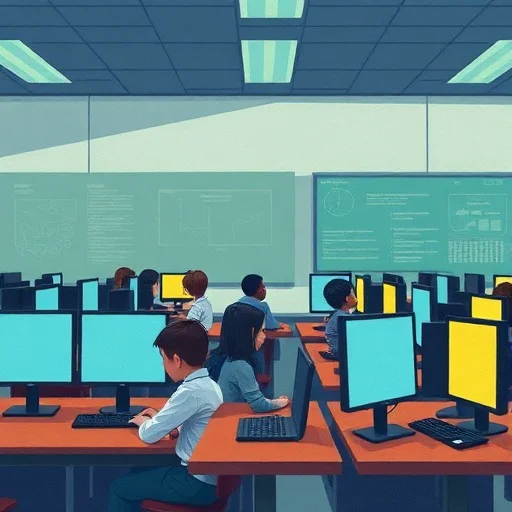
Hybrid work arrangements were one of the most important considerations for young professionals, with very few wanting to work exclusively from the office. According to a recent survey of students, most students are already working while studying, and they are primarily seeking flexibility in their first job.
For the last two years, conversations about AI in education have tended to fall into two camps: excitement about efficiency or fear of replacement. Teachers worry they’ll lose authenticity.
When you need to fix your sink, learn how to use AI, or cook up a new recipe, chances are you searched on YouTube, TikTok, Instagram, or even Facebook–and found a video, watched it, paused it, rewound it, and successfully accomplished your goal.
Teacher evaluations have been the subject of debate for decades. Breakthroughs have been attempted but rarely sustained. Researchers have learned that context, transparency, and autonomy matter.
STEM workforce shortages are a well-known global issue. With demand set to rise by nearly 11 percent in the next decade, today’s students are the solution. They will be the ones to make the next big discoveries, solve the next great challenges, and make the world a better place.
Special education is at a breaking point. Across the country, more children than ever are being referred for evaluations to determine whether they qualify for special education services.
When a school building fails, everything it supports comes to a halt. Learning stops. Families scramble. Community stability is shaken. And while fire drills and lockdown procedures prepare students and staff for specific emergencies, the buildings themselves often fall short in facing the unexpected.
The rapid rise of generative AI has turned classrooms into a real-time experiment in technology use. Students are using AI to complete assignments, while teachers are leveraging it to design lessons, streamline grading, and manage administrative tasks.
As K-12 schools prepare for 2026, edtech and innovation are no longer driven by novelty–it’s driven by necessity. District leaders are navigating tighter budgets, shifting enrollment, rising cybersecurity threats, and an urgent demand for more personalized, future-ready learning.
In light of Donald Trump assuming a second presidential term in 2025, conversations concerning dismantling the United States Department of Education have resurfaced.
As generative AI technologies evolve, educators are moving away from fears about AI-enabled cheating and are embracing the idea that AI can open new doors for teaching and learning.
There is a squeaky old merry-go-round in my neighborhood that my own children play on from time to time. Years of kids riding on it have loosened its joints so it spins more freely and quickly.
eSchool News·
Cookies
We use analytics cookies (Google Analytics) to improve this site. Accept to allow them.
Privacy Policy